
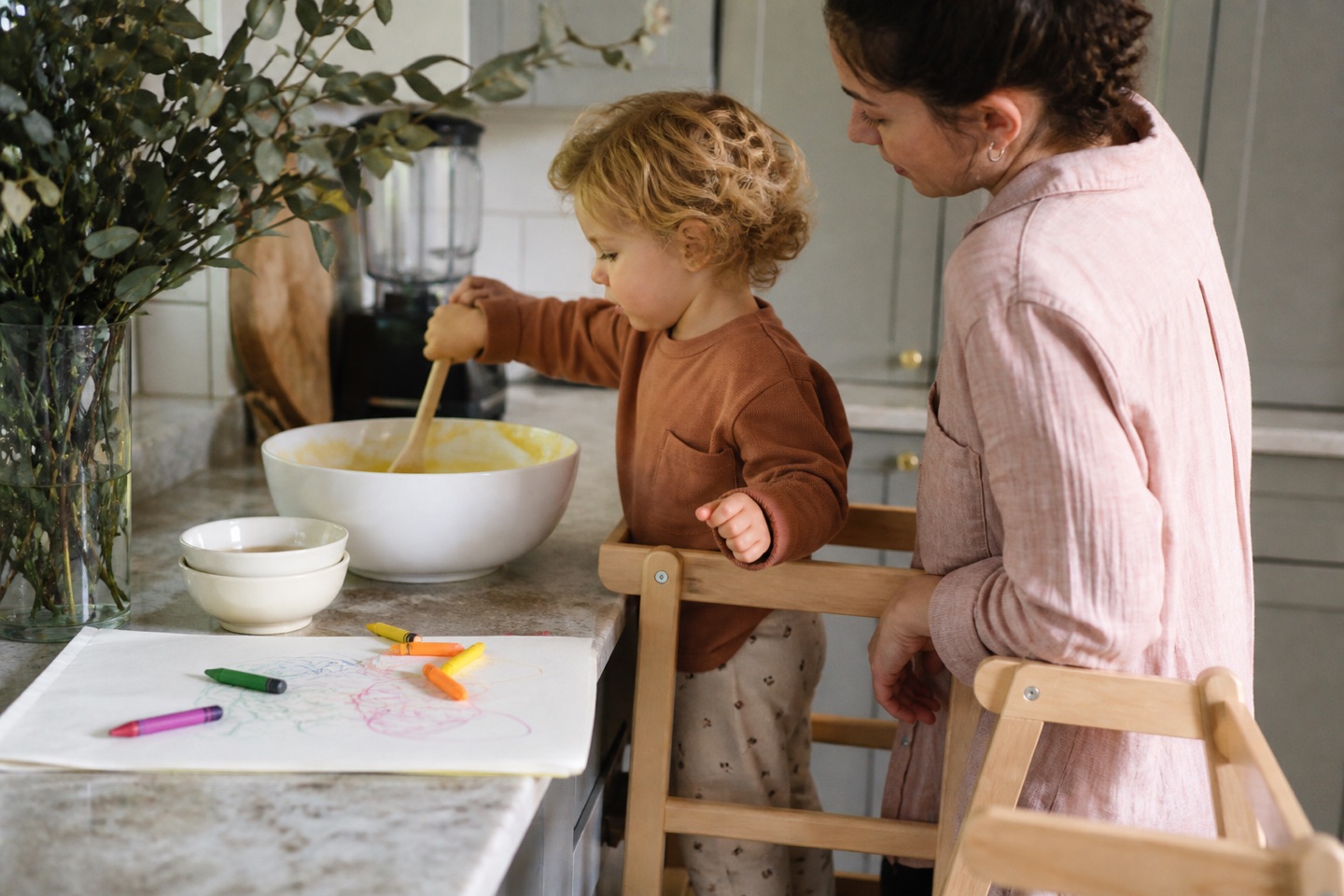
Independence works better when the room helps
A low coat hook, a step stool used with supervision, open toy bins, and a cup kept within reach let a two-year-old participate in ordinary life. A learning tower can help in the kitchen if it is stable, correctly used, and kept away from heat and sharp tools.
Toddlers this age often learn through imitation. Washing a vegetable, carrying napkins, or putting laundry in a basket can be more absorbing than a toy designed to look like work.
Potty readiness is not a party deadline
Some children show readiness around two; others do not. CDC guidance notes that most children are not able to toilet train until age two to three. Interest, awareness, communication, and the ability to manage clothing matter more than a calendar date.
A simple floor potty or stable seat insert, easy-off pants, and a neutral cleanup plan cover the equipment. Starting before a child is ready can turn a body skill into a contest nobody enjoys.
Play becomes a small story
Two-year-olds begin combining objects and ideas: food on a toy plate, a blanket over a doll, a block used as a phone. Add a few props and let the story stay theirs. Dress-up pieces, a play kitchen, chunky puzzles, blocks, and washable art materials all leave space for invention.
The CDC lists two-word combinations, running, kicking a ball, and using a spoon among common milestones by two. Milestones describe what many children do; they are not a gear shopping schedule. Bring concerns or lost skills to your child’s clinician.
Questions parents ask at this stage
- What toys hold a two-year-old’s attention?
- Pretend-play pieces, blocks, simple puzzles, balls, art supplies, and objects with switches or knobs tend to meet the way two-year-olds experiment. Choose toys that can be used several ways and withstand repetition.
- How do I know if my two-year-old is ready for potty training?
- Look for a cluster of signs such as interest, awareness of a wet or dirty diaper, communication, and the ability to sit and help manage clothing. Discuss readiness with your child’s clinician rather than pushing to meet an age target.
- When should we move to a toddler bed?
- Make the move when the crib is no longer safe for your child’s size or climbing ability, or another practical need makes the transition sensible. Follow the crib maker’s limits and childproof the entire room before the bed becomes accessible.


