
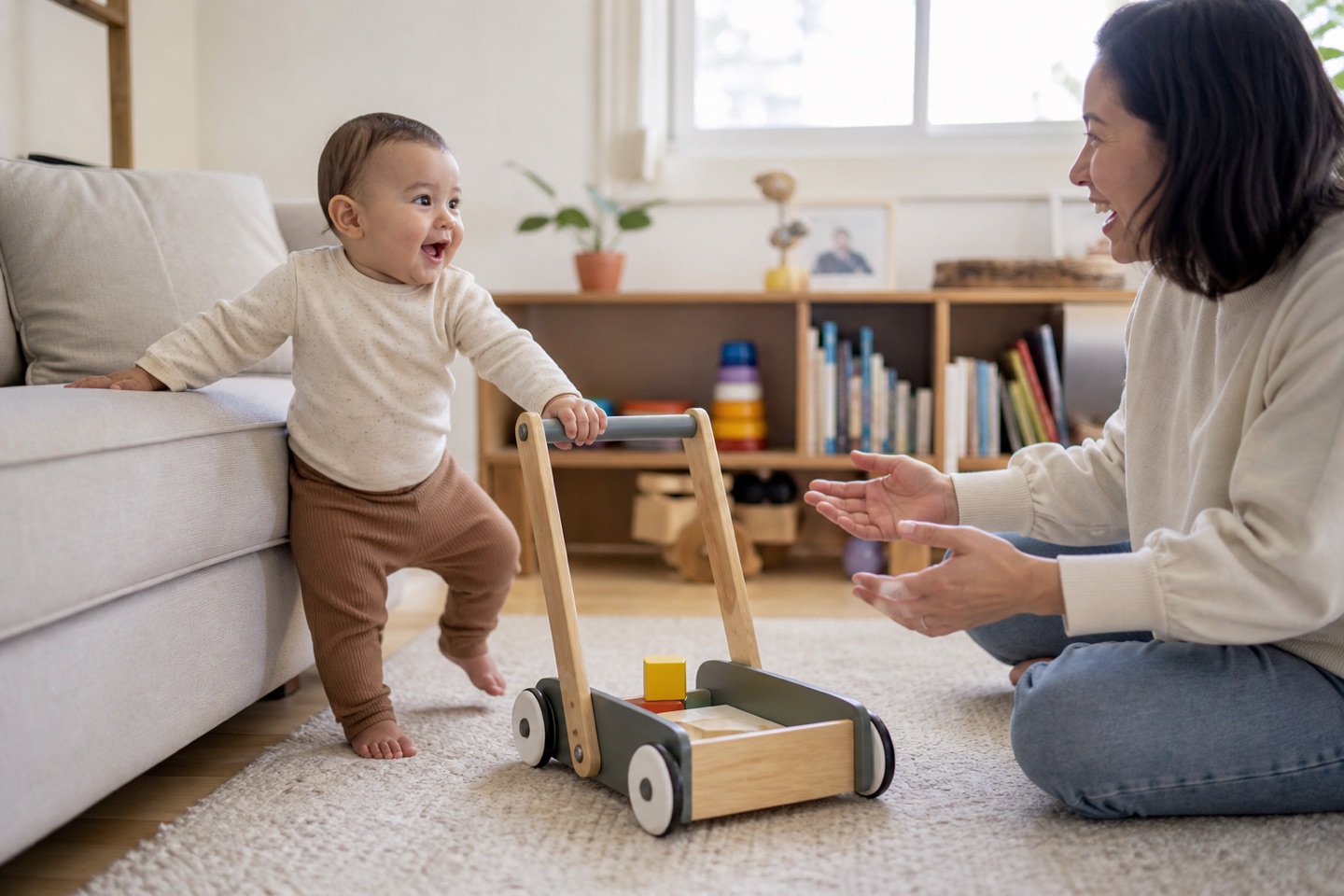
Make room for movement
Around the first birthday, many children pull to stand, cruise along furniture, or begin walking. Others take longer. A clear floor, anchored furniture, secured stairs, and a few stable surfaces matter more than a shoe collection for a child who is still practicing indoors.
A sturdy push toy can offer practice once a child can pull up and control it. Skip seated baby walkers; the AAP does not recommend them. The goal is room to build balance, not a device that moves faster than the child can manage.
Meals get messier before they get easier
The CDC’s one-year milestones include drinking from an open cup with help and picking up small pieces of food with finger and thumb. A small open cup, a straw cup, and short utensils create low-stakes practice. Expect the floor to participate.
A suction bowl and washable bib can reduce cleanup, but no plate is stronger than a toddler committed to physics. Buy for easy washing and a comfortable seat first.
The best toys do more than one thing
Containers, blocks, stacking cups, shape sorters, balls, dolls, and board books can change with the child. A cup gets mouthed, nested, filled, poured, hidden, and eventually served as imaginary tea. That range is what makes a toy last.
Keep only a few options within reach and rotate the rest. A calmer shelf makes it easier for a one-year-old to choose—and easier for an adult to reset the room after bedtime.
Questions parents ask at this stage
- What toys are best for a one-year-old?
- Look for simple, sturdy toys that support filling and emptying, stacking, pushing, pretend play, and shared reading. Large pieces, durable materials, and a wide age range matter more than electronic features.
- Does a one-year-old need a push walker?
- No. It can be a useful toy for a child who can already pull to stand and control a stable push toy, but furniture cruising and supported practice work too. Avoid seated baby walkers.
- What cups should a one-year-old use?
- A small open cup with adult help and a simple straw cup both build useful skills. Choose designs with few parts so they can be cleaned completely and used every day.


