The floor becomes the main room
A washable mat, a few reachable toys, and supervised floor time go a long way. Rotate what is available instead of setting out everything at once. A cup, fabric square, board book, and safe household object can hold attention as thoroughly as a battery-powered activity center.
Rolling and scooting have a habit of appearing just after you said, “They cannot get over there yet.” Secure furniture, cords, blind strings, plants, and small objects before movement makes the decision for you.
Starting solids is a skill, not a product category
CDC guidance says most children can begin foods other than breast milk or formula at about six months, when they show developmental readiness such as head control and the ability to sit with support. Your child’s clinician can help you decide when and how to begin.
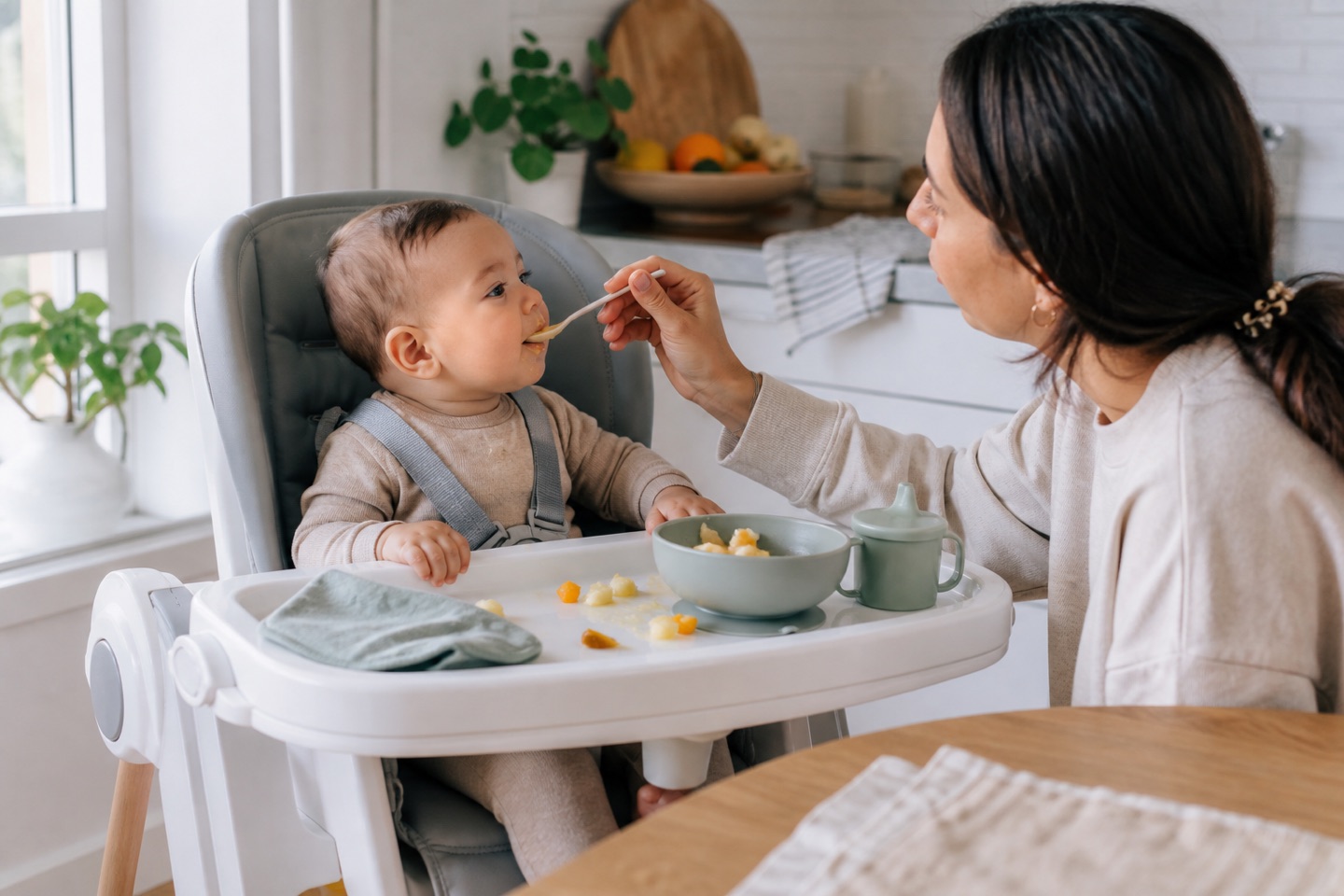
A stable high chair, easy-clean bib, a small cup, and a spoon or two cover the equipment. The real work is offering appropriate textures, supervising closely, and accepting that early meals are equal parts eating and research project.
Transitions arrive before the calendar invitation
Stop swaddling when the baby starts trying to roll. Lower the crib mattress before pulling to stand. Move tempting objects before crawling. Gear transitions should follow the skill you see, not the age printed in a roundup.
Teethers, stacking toys, cups, and board books often outlast flashier age-specific gadgets. Look for items that can be held, mouthed, dropped, nested, and eventually used in pretend play.
Questions parents ask at this stage
- What gear do babies need between 3 and 12 months?
- The useful additions are a safe floor-play area, age-appropriate teethers and books, a stable high chair when solids begin, and feeding pieces sized for small hands. Movement may also trigger changes to the crib and home setup.
- When should a baby start solids?
- For many babies, it is around six months when developmental readiness signs are present. CDC and AAP guidance advise against starting before four months. Discuss timing, allergens, textures, and choking prevention with your child’s clinician.
- When should I stop using a swaddle?
- Stop as soon as the baby shows signs of trying to roll. That may happen around three or four months, but it can happen earlier. Weighted swaddles are not recommended by the AAP.


