
Conversation is now part of the activity
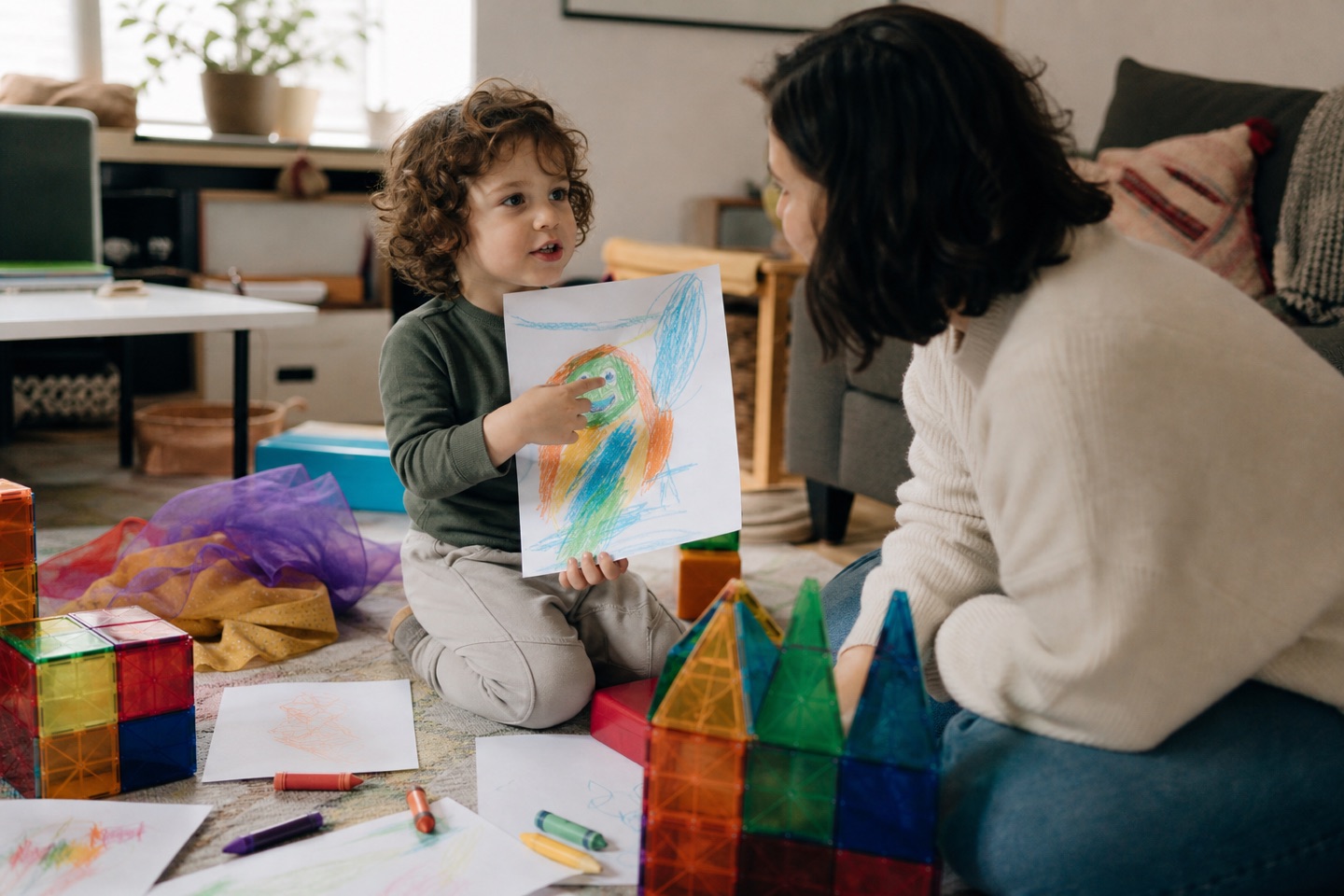
Three-year-olds often ask questions, tell short stories, and explain what a picture is doing. Read books with room to talk. Ask what might happen next, then wait through the answer—even if it takes the scenic route.
Puppets, dolls, dress-up clothes, toy food, vehicles, and building pieces give those new words somewhere to live. You do not need a complete themed set. A scarf has played more characters than most expensive costumes.
Preschool readiness looks like everyday practice
A backpack the child can open, a lunch container they can practice with, shoes they can manage, and a clear place for belongings are practical. So are short separations, predictable routines, and chances to follow two-step directions.
The CDC’s three-year milestones include back-and-forth conversation, joining other children in play, drawing a circle with help, using a fork, and putting on some loose clothing. Children develop at different rates. Share concerns—or any loss of skills—with a clinician and ask about developmental screening.
Give big energy a destination
Outdoor time, balls, a correctly fitted helmet for wheeled play, and room to climb or run turn energy into practice. Match scooters, balance bikes, or other ride-ons to the child’s actual size and coordination, not the age range printed in large type on the box.
Indoors, keep paper, washable crayons, tape, play dough, puzzles, and building materials accessible in modest amounts. A three-year-old can help return each category to an obvious bin. The cleanup will not be exquisite. It will be theirs.
Questions parents ask at this stage
- What are good toys for a three-year-old?
- Open-ended building pieces, pretend-play props, art materials, puzzles, dolls or figures, and simple games support the stories and problem-solving that expand at three. Favor sturdy materials and room for the child’s own idea.
- What does a three-year-old need for preschool?
- Follow the school’s list. Commonly useful items include a manageable backpack, labeled spare clothes, an easy lunch setup if needed, and shoes and outerwear the child can practice handling.
- Are milestone lists a test?
- No. They help families notice development and start a conversation. They do not replace validated screening. If your child is missing milestones, has lost a skill, or something worries you, talk with your child’s clinician and ask what to do next.


